English
 中文
中文 Español
 русский
 français
 português
 العربية
 Deutsch
 italiano
 한국어
한국어 Polska
×
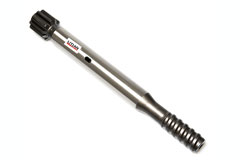
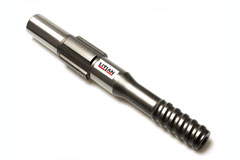
Drill bit extension rods—commonly referred to as drill rods or drill pipes—are essential consumables in top hammer and DTH drilling systems. They transmit rotational torque and percussive energy from the rig down to the bit, while also helping maintain borehole alignment and stability. Because they endure constant mechanical stress, impact, vibration, and environmental exposure, their lifespan varies widely depending on how they are used and the conditions they face.
Understanding the typical service life range and the main factors that influence it allows drilling teams to plan replacements more effectively, reduce unexpected breakdowns, and improve overall cost control.
High-quality drill bit extension rods generally deliver between 500 and 2,000 drilling hours of active service. In terms of drilled depth, this often translates to roughly 2,000 to 10,000 cumulative meters. Under ideal conditions—good rock, proper settings, and excellent maintenance—premium rods can reach 15,000–20,000 meters or more. Standard or economy-grade rods usually fall toward the lower end: 500–1,000 hours or 2,000–5,000 meters. Well-manufactured rods made from carburized high-alloy steel with precision-machined threads commonly achieve 1,200–2,000+ hours or 6,000–12,000+ meters. In real-world mixed mining and quarrying operations, most rods are retired after 800–1,500 hours or 4,000–8,000 meters due to accumulated wear. These figures are averages only.
Lifespan is always measured by actual drilling time or meters drilled, not by calendar age, since idle storage has little effect.
The geological environment is frequently the single largest factor determining how long a rod will last.
Hard, highly abrasive rock types—such as granite, quartzite, basalt, or gneiss—cause rapid wear on both the rod body and threads, often cutting life by 30–60% compared to softer formations.
Fractured, jointed, or broken ground introduces severe vibration, sudden bending loads, and impact shocks that accelerate fatigue and can lead to early cracking or thread failure.
Corrosive groundwater—high in salinity, acidity, or dissolved minerals—promotes rust, pitting, and surface degradation on exposed areas, shortening life noticeably.
In contrast, softer or less abrasive rock types like limestone, sandstone, or shale allow rods to wear much more slowly and frequently reach the upper limits of their expected lifespan. Stable, uniform geology with minimal fracturing also helps rods perform closer to their maximum potential.
Operational choices made at the rig can dramatically affect rod longevity.
Excessive rotation speed (RPM) or overly aggressive feed pressure generates too much friction, heat, and torque stress across the rod body and threaded connections.
Inadequate flushing pressure or insufficient air/water volume leaves cuttings in the hole, leading to packing, overheating, jamming, and galling at the joints.
High vibration levels or sudden torque spikes—common when drilling through fractured zones or when parameters are poorly matched to the rock—speed up material fatigue.
Frequent rod additions or rough handling during make/break cycles can cause misalignment, cross-threading, or excessive thread wear from improper stabbing.
When drilling parameters are carefully tuned to suit the specific rock type and formation, rod life is commonly extended by 20–50% or more.
The inherent quality of the rod material and how it is produced make an enormous difference in durability.
Rods manufactured from high-grade alloy steel, followed by precise carburizing, controlled quenching, and tempering, show far superior resistance to fatigue, bending, abrasion, and thread wear.
Precision CNC machining and thread rolling produce tight tolerances, smooth surface finishes, and consistent thread geometry, which greatly reduce galling, stress concentrations, and early cracking.
Some premium rods receive additional surface treatments or coatings to improve corrosion resistance or lower friction during connections.
Lower-grade rods with inconsistent heat treatment, rough machining, or substandard steel often fail much earlier—sometimes after only 500–800 hours—while well-made rods routinely deliver 1,500+ hours of reliable service.
Threads are the most vulnerable and critical part of any extension rod. Galling and seizing occur when threads do not receive adequate lubrication or when debris and rock fines accumulate during repeated make/break operations. Stripping, cross-threading, or flank damage can result from poor alignment, excessive make-up torque, or careless stabbing during connections. Each connection cycle removes microscopic amounts of material from the thread flanks over time, and using low-quality or insufficient thread compound accelerates this gradual wear. Fatigue cracks frequently initiate at the thread root fillets due to repeated bending stress, shock loading, or cyclic tension/compression during drilling. Regular visual inspection of thread condition, combined with proper lubrication practices and careful handling during connections, is essential to prevent premature failure.
To achieve the longest possible service life, operators should clean threads thoroughly after every shift to remove rock fines, dust, and debris that accelerate wear. Inspect rods regularly for visible cracks, bends, thread galling, or excessive wear, and measure thread dimensions when possible. Store rods straight, off the ground, and protected from moisture and direct sunlight to prevent corrosion and deformation. Always match rod type, steel grade, thread design, and length to the specific rock conditions, drilling method, and rig setup. Train operators to perform smooth starts and stops, align connections carefully, apply correct make-up torque, and monitor torque, vibration, and penetration rate in real time. Replace rods proactively—when thread wear reaches 50–70% of allowable tolerance or when early signs of damage become visible—rather than waiting for complete failure. Choosing high-quality rods with proven heat treatment, precision threads, and consistent manufacturing quality delivers the best long-term value by extending service life and significantly lowering cost per meter drilled.
By staying alert to early wear indicators—such as slower penetration rates, increased vibration, loose or leaking connections, or visible thread damage—and consistently applying these maintenance and operational practices, drilling teams can reliably push extension rods toward the upper end of their expected lifespan range and achieve better overall drilling economics.
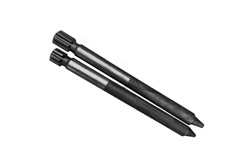
For operators looking to extend rod life and lower cost per meter, Litian provides premium extension drill rods engineered with high-grade alloy steel, precision threads, and advanced heat treatment—built to perform reliably even in the toughest conditions.
This is the first one.

Litian is a professional manufacturer focused on the production of rock drilling tools and excavation tools.
Learn More >