English
 中文
 Español
 русский
 français
 português
 العربية
 Deutsch
 italiano
 한국어
 Polska

×


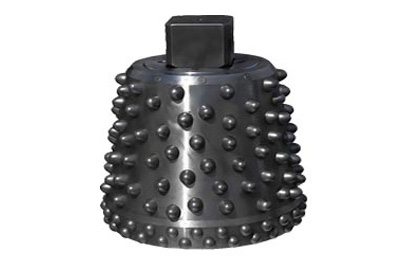
Kerf type RBM cutter is a type of TCI roller cutter widely used in raise boring equipment for rock excavation. Featuring multiple annular grooves (chipways) on the cutter surface and carbide inserts distributed around the grooves, this cutter is designed to improve rock breaking efficiency and maintain stable performance in demanding drilling conditions. As one of the most commonly used raise boring drilling tools, Kerf roller cutters are available in different configurations to meet various project requirements.
The cutter adopts premium tungsten carbide inserts with different configurations, including chisel, conical, spherical and ballistic inserts. The optimized insert design improves rock penetration efficiency while reducing premature wear during continuous excavation.
Equipped with high-quality bearing structures and metal seals, Litian Kerf Type RBM Cutter maintains stable rotation performance under heavy loads, abrasive environments and long-duration drilling operations.
To reduce operational costs, Litian provides repairable cutter solutions and customization services based on equipment requirements, geological conditions and project specifications.
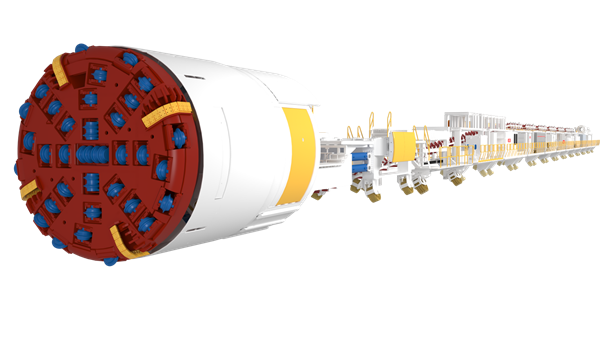
Kerf type RBM cutters are mainly used in raise boring equipment for rock excavation. Their performance depends on factors such as rock hardness, geological conditions, cutter configuration and operating parameters. Selecting the appropriate cutter design helps achieve stable cutting performance, improve drilling efficiency and extend service life under different working conditions.
With a TCI cutter structure, the Kerf type RBM cutters are designed for efficient rock breaking and chip removal during raise boring operations. The suitable cutter configuration may vary depending on the drilling environment and project requirements.
Selecting the correct operating parameters is essential for maximizing cutter life and excavation efficiency. The recommended values may vary depending on rock hardness, machine configuration and project conditions.
1. Applicable rock hardness: protodyakonov scale of hardness 11≤f≤20.
2. Recommended WOB of roller cutter: 100KN~200KN.
3. Maximum WOB (weight on bit): 245KN.
4. Recommended cutterhead rotation speed: 3-15 RPM.
5. Maximum linear velocity: 90m/min.
Different geological conditions require different cutter configurations. Hard rocks such as granite and basalt usually require more wear-resistant insert designs.
Cutter diameter, taper design and bearing structure should match the specifications of the raise boring machine and cutterhead.
Chisel, conical, spherical and ballistic inserts provide different rock-breaking characteristics for various formations.
Litian provides multiple Kerf Roller Cutter models with different dimensions and configurations to meet various raise boring requirements.
NO. | Model | A | B | C | E | F | Rows | Taper |
1 | LT347520-00A | 336 | 246 | 347 | 76 | 76 | 5 | 20° |
| ||||||||
NO. | Model | A | B | C | E | F | Rows | Taper |
2 | LT347520-00B | 336.2 | 246 | 346.7 | 76 | 76 | 5 | 20° |
| ||||||||
NO. | Model | A | B | C | D | E | F | Rows | Taper | |
3 | LT340420-00 | 335 | 239.5 | 340 | 40 | 80 | 80 | 4 | 20° | |
4 | LT340520-00B | 335 | 239.5 | 340 | 40 | 82 | 82 | 5 | 20° | |
| ||||||||||
NO. | Model | A | B | C | D | E | F | Rows | Taper | |
5 | LT320520-00 | 331 | 227 | 320 | 45 | 86 | 80 | 5 | 20° | |
6 | LT320620-00 | 331 | 227 | 320 | 45 | 86 | 80 | 6 | 20° | |
| ||||||||||
Frequently Asked Questions About Kerf Type RBM Cutters
A: A raise boring cutter breaks rock through the interaction between the cutter body, carbide inserts and rock formation. The cutter applies pressure to create fractures and remove rock chips during rotation, allowing efficient excavation in raise boring operations.
Read More: Rock Breaking Mechanism of Raise Boring Rig Cutters
A: Kerf Roller Cutter uses a kerf cutting structure designed for efficient rock penetration in harder formations, while Random Type RBM Cutter uses randomly distributed buttons for broader crushing coverage in different rock conditions.
A: Proper operating parameters, regular inspection and timely maintenance can help extend cutter service life. Monitoring carbide wear, bearing conditions and overall cutter performance is important for maintaining stable drilling efficiency.
A: Yes. Kerf Type RBM Cutter can be customized according to equipment requirements, geological conditions and specific project needs, including cutter dimensions, carbide configurations and structural designs.


Litian is a professional manufacturer focused on the production of rock drilling tools and excavation tools.
Learn More >