English
 中文
中文 Español
 русский
 français
 português
 العربية
 Deutsch
 italiano
 한국어
한국어 Polska
×
Hard rock drilling places extreme demands on button bits. In abrasive granite, quartzite, or basalt formations, the combination of high impact, abrasion, and thermal stress can quickly degrade performance if maintenance is neglected. In underground tunneling or deep development drifts, even small losses in penetration rate lead to longer cycle times and higher project costs.
Effective maintenance requires a predictive approach tailored to your specific rock conditions, rig setup, and drilling depth rather than relying on fixed schedules. The objective is to preserve consistent energy transfer throughout the tool string while minimizing unplanned downtime in confined spaces.
Begin with visual and dimensional checks after every shift or every 50–100 meters drilled in hard rock. Look for early signs such as uneven button flattening, micro-cracks at the carbide-steel interface, body wash near gauge buttons, or “snake-skin” texture indicating thermal fatigue from insufficient flushing.
In hard rock, rotation speed and feed pressure must stay balanced to ensure even wear distribution. Excessive feed can cause button shearing, while insufficient rotation leads to polishing and glazing. Keep a simple drilling log noting meters drilled, rock type, penetration rate changes, and observed wear patterns. This data helps forecast regrinding intervals more accurately than fixed schedules.
After each use, remove cuttings and sludge immediately while the bit is still warm. Use compressed air combined with a soft brass brush to clear all flushing holes and grooves without damaging carbide inserts. In wet drilling, mild neutral detergent followed by thorough rinsing prevents mineral buildup that exacerbates abrasion in subsequent runs.
Blocked flushing channels are a hidden killer in hard rock — they cause localized overheating, button spalling, and premature body erosion. For deep holes common in tunneling, consider periodic back-flushing during operations to maintain clear paths and reduce the risk of rod sticking.
Adopt an “early and light” regrinding policy in hard rock drilling. Intervene when wear flats reach approximately one-third of the button diameter or when penetration rate drops by 10–15%. Delaying regrinding forces the rig to work harder, increasing vibration and the chance of thread damage on the bit.
Use diamond-impregnated grinding wheels matched to the original button profile. Grind in short passes with adequate coolant to avoid creating heat checks in the carbide. Restore correct gauge button height and face geometry to maintain hole straightness and efficient cuttings removal. In highly abrasive formations, regrinding may be required every 60–150 meters depending on quartz content. After grinding, always deburr edges and inspect for signs of burning.
Proper regrinding can restore 80–90% of original performance and allow multiple cycles before the bit body reaches its wear limit.
Apply recommended thread grease before every assembly and use calibrated torque tools to prevent galling. Over-tightening in high-impact conditions is a common cause of thread failure. Store cleaned and dried bits in a dry, vibration-free area on racks that prevent button-to-button contact. Avoid exposure to moisture, which can initiate corrosion at thread roots and lead to sudden failures underground.
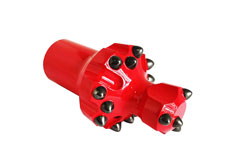
Litian designs threaded button bit solutions with enhanced carbide grades and heat treatment specifically for sustained performance in hard rock environments.
View button bit maintenance as part of the entire tool string. Pair well-maintained bits with matched drill rods and shank adapters to ensure efficient energy delivery. In hard rock tunneling, older but still serviceable bits can be used for collaring or less critical holes, reserving freshly reground bits for production rounds where straightness and speed matter most.
Q: How often should threaded button bits be reground in hard rock formations?
Intervals depend on rock abrasiveness and operating parameters, but in granite or similar hard rock, regrinding is typically needed every 60–150 meters or when button flats reach one-third of the diameter. Monitoring penetration rate provides the most accurate trigger.
Q: What are the most common failure modes for button bits in hard rock?
Button shearing, thermal cracking from poor flushing, and body wash near the gauge line are frequent. Early detection through regular inspection and optimized drilling parameters can prevent most of these issues.
Q: How do different button shapes affect maintenance needs in hard rock?
Spherical buttons generally offer better wear resistance and simpler regrinding in highly abrasive rock, while ballistic or parabolic shapes may penetrate faster but require more frequent profile restoration.
Q: Why is proper flushing so critical when using hard rock drill bits?
Adequate flushing removes cuttings, cools the bit face, and prevents heat buildup that causes carbide fatigue. Explore more details on hard rock drill bits and their design considerations.
Q: What should operators look for when selecting a 45mm drill bit for hard rock tunneling?
Focus on carbide grade, face design (e.g., drop-center for stability), and flushing hole configuration. The 45mm drill bit with spherical buttons often performs well in balanced abrasive conditions when paired with correct regrinding practices.
This is the first one.

Litian is a professional manufacturer focused on the production of rock drilling tools and excavation tools.
Learn More >