English
 中文
中文 Español
 русский
 français
 português
 العربية
 Deutsch
 italiano
 한국어
한국어 Polska
×
Reaming bits are essential in top hammer drilling for enlarging boreholes accurately and efficiently in mining, quarrying, tunneling, and construction. Selecting the correct size ensures optimal penetration rates, borehole stability, and reduced equipment wear.
This guide covers key factors in choosing reaming bit sizes, standard diameters, thread compatibility, and best practices for pilot and dome configurations.
Reaming drill bits enlarge a pre-drilled pilot hole to the final diameter in a two-pass process:
Pilot reaming bits: Create the initial smaller hole for alignment and straightness.
Dome reaming bits: Follow to expand the hole aggressively while maintaining smooth walls.
Common applications include blast hole enlargement, raise boring starts, and ventilation shafts.
Selecting the right diameter depends on several critical elements:
Start with project requirements (e.g., explosive charge size, casing needs, or ventilation flow).
Typical final sizes range from 76mm to 152mm.
Match the bit thread to your drifter, rods, and couplings (e.g., R32 for lighter rigs, T45/T51 for heavier duty).
Abrasive/hard rock: Larger peripheral buttons and robust designs.
Fractured/soft rock: Focus on straightness with pilot guidance.
Pilot pass: Smaller diameter (64-89mm).
Reaming pass: Larger diameter (76-152mm).
Oversized bits increase torque demands; undersized reduce efficiency.
Industry-standard sizes vary by thread, with common options for dome and pilot bits:
| Thread Type | Common Pilot Diameters (mm) | Common Dome/Reaming Diameters (mm) | Typical Applications |
|---|---|---|---|
| R25/R28 | 64-76 | 76-89 | Light benching, drifting |
| R32 | 64-89 | 76, 89, 102, 127 | Quarrying, small tunneling |
| T38 | 64-89 | 76, 89, 102, 127 | Medium-depth mining |
| T45 | 89-102 | 102, 115, 127, 152 | Heavy production drilling |
| T51/ST58 | 102-115 | 127, 152 | Large-scale underground |
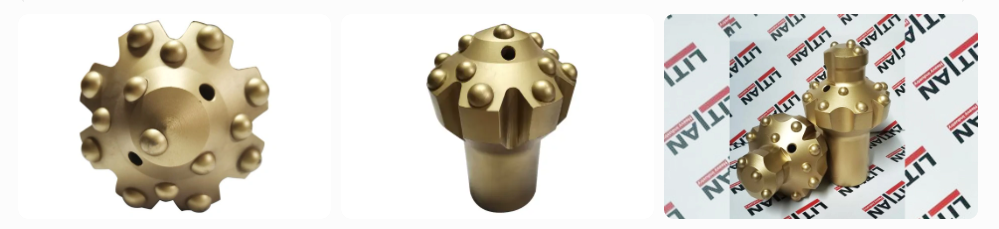
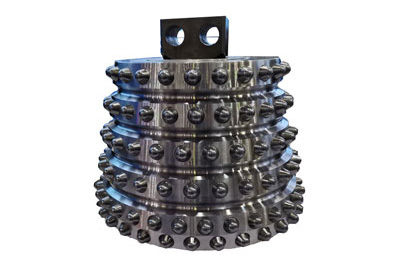
(Examples of R32-threaded dome reaming bits in 76mm, 89mm, and 102mm sizes.)
Determine Final Hole Size — Based on blast design or structural needs.
Choose Thread System — Align with existing rods and drifter (R32 is versatile for many operations).
Select Pilot Size — Typically 20-40mm smaller than final for straightness.
Pick Dome Size — Matches final diameter; ensure 10-30mm enlargement per pass.
Consider Button Configuration — More peripheral buttons for abrasive rock.
Test and Adjust — Monitor penetration and wear in field conditions.
Quarrying (bench drilling): R32/T38 with 89-102mm final (pilot 64-76mm).
Underground Mining (raise boring): T45/T51 with 127-152mm.
Tunneling: R32 102mm or T38 127mm for cut holes.
Use adequate flushing to clear cuttings and cool the bit.
Inspect buttons regularly; regrind when wear flats exceed 1/3 button height.
Pair with high-quality threaded rods for energy transfer.
In abrasive formations, opt for larger diameters to distribute wear.
Proper size selection can improve drilling speed by 15-30% and extend tool life significantly.
Choosing the right reaming bit size balances project requirements, equipment limits, and geological challenges. Start with standard diameters for your thread type, prioritize the two-pass process (pilot for accuracy, dome for enlargement), and adjust based on real-world performance.
Consult manufacturer catalogs for exact specifications compatible with major drifters.
Epiroc Rock Drilling Tools Handbook (epiroc.com)
Sandvik Mining and Rock Technology: Top Hammer Consumables Guide (rocktechnology.sandvik)
Robit Rocktools: Reaming and Raise Boring Tools Overview (robitgroup.com)
Halco Rock Tools: Threaded Drilling Accessories Specifications (halcorocktools.com)

Litian is a professional manufacturer focused on the production of rock drilling tools and excavation tools.
Learn More >