English
 中文
中文 Español
 русский
 français
 português
 العربية
 Deutsch
 italiano
 한국어
한국어 Polska
×
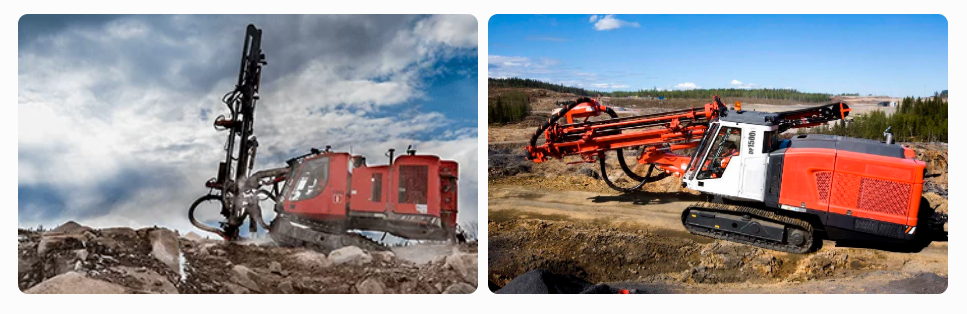
Top hammer drilling remains a preferred method in mining, quarrying, tunneling, and construction due to its efficiency in hard rock environments. Reaming bits are crucial for enlarging boreholes, and the two primary types—pilot reaming bits and dome reaming bits—serve complementary roles in a typical two-pass process.
This comprehensive guide breaks down their designs, functions, differences, and best-use scenarios to help drilling professionals optimize performance and reduce operational costs.
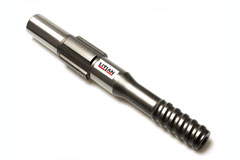
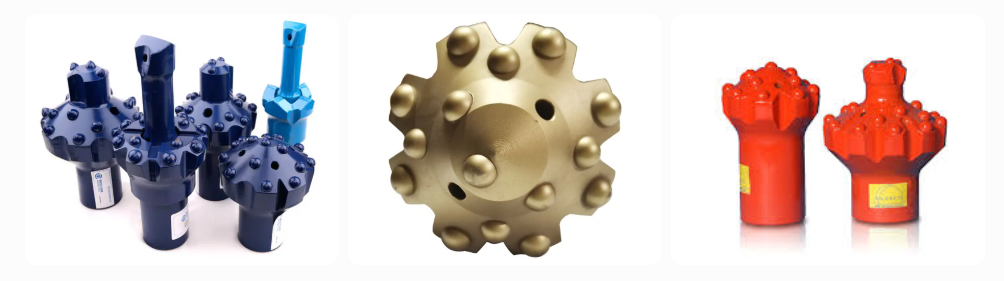
A pilot reaming bit is engineered to create the initial smaller-diameter hole, known as the pilot hole. Its design prioritizes precision and straightness.
Compact front section with carbide buttons concentrated for initial penetration.
Often includes a pilot adapter for enhanced guidance.
Common thread systems: R25, R32, T38, T45, T51.
Establishing accurate alignment in long-hole drilling or benching.
Ideal for fractured rock where deviation can lead to significant issues.
Pilot bits ensure the borehole starts straight, setting the foundation for subsequent enlargement.
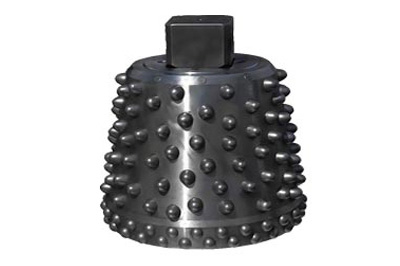
A dome reaming bit has a distinctive rounded, dome-shaped head that allows for wider cutting diameter and aggressive material removal.
Larger peripheral carbide buttons for efficient enlargement.
Domed profile for even impact distribution and reduced vibration.
Typical diameters ranging from 76mm to 152mm.
Enlarging the pilot hole to the final required size.
Suited for abrasive or hard rock conditions needing high volume removal.
Dome bits provide smooth borehole walls and greater durability in demanding environments.
| Aspect | Pilot Reaming Bit | Dome Reaming Bit |
|---|---|---|
| Head Design | Compact with guidance focus | Rounded dome for wider coverage |
| Diameter Range | Smaller (e.g., 64-89mm) | Larger (e.g., 76-152mm) |
| Main Function | Creates precise pilot hole | Enlarges to final diameter |
| Drilling Pass | First pass (initiation) | Second pass (finishing) |
| Penetration Characteristics | High accuracy and straightness | Aggressive removal with stability |
| Best Rock Types | Fractured or variable formations | Hard, abrasive rock |
| Thread Compatibility | R25, R32, T38, T45 | R32, T38, T45, T51, ST68 |
| Key Benefits | Minimizes deviation; improves overall hole quality | Smoother walls; longer tool life in tough conditions |
Pilot Reaming Bits: Long-hole production drilling, raise boring starts, and precision benching in quarries.
Dome Reaming Bits: Slot raises, ventilation shafts, and large-diameter holes in underground mining.
The standard process involves using a pilot bit first for alignment, followed by a dome bit for efficient enlargement.
Assess rock hardness and abrasiveness – pilot for precision in unstable ground.
Consider required final diameter and depth.
Match thread type to your drifter (e.g., R32 is versatile for both).
Evaluate equipment power and flushing capabilities.
Factor in cost vs. lifespan – proper pairing can reduce overall drilling expenses.
To maximize performance:
Regularly inspect carbide buttons for wear or damage.
Ensure adequate water flushing to prevent overheating.
Rotate bits and sharpen when penetration rates drop by 20-30%.
Store properly to avoid corrosion.
Following these practices can extend bit life significantly and improve drilling efficiency.
The choice between a pilot reaming bit and a dome reaming bit depends on the drilling stage and project requirements. Pilot bits excel at creating accurate starter holes, while dome bits handle enlargement with robustness. Understanding these differences allows for better tool selection, leading to higher productivity and lower costs in top hammer drilling operations.
Epiroc: Rock Drilling Tools Technical Handbook (epiroc.com)
Sandvik Mining and Rock Solutions: Top Hammer Drilling Consumables Guide (rocktechnology.sandvik)
Robit Plc: Reaming Tools Overview and Specifications (robitgroup.com)
Halco Rock Tools: Raise Boring and Reaming Applications (halcorocktools.com)

Litian is a professional manufacturer focused on the production of rock drilling tools and excavation tools.
Learn More >