English
 中文
中文 Español
 русский
 français
 português
 العربية
 Deutsch
 italiano
 한국어
한국어 Polska
×
Many people searching for drilling tools often wonder: Is a core drill the same as a hammer drill?
Although both tools are used for drilling into hard materials like concrete, masonry, and stone, they serve very different purposes and operate on completely different principles. Understanding the distinction is important when choosing the right tool for your project—whether you are doing general construction work or specialized core sampling in mining and geotechnical applications.
A hammer drill (also called a rotary hammer in larger models) is primarily designed for drilling holes and driving fasteners into hard surfaces. It combines standard rotary drilling with a rapid hammering (percussive) action.
The hammering mechanism helps the bit chip away at concrete or masonry as it rotates.
It is excellent for installing anchors, screws, or making smaller through-holes.
Common in general construction, electrical, and plumbing work.
Hammer drills are typically used with standard twist drill bits or SDS bits, and their main goal is speed and ease of penetration rather than extracting a perfect sample.
A core drill is a specialized tool designed to cut a cylindrical hole and remove a solid core (sample) of the material. It uses a hollow, cylindrical diamond-tipped or carbide bit that cuts around the perimeter rather than breaking material in the center.
The result is a clean, precise circular hole with an intact core sample left inside the bit.
Widely used in concrete core sampling, geotechnical testing, mining exploration, plumbing penetrations, and decorative work.
Core drills can be handheld, rig-mounted, or wet/dry types depending on the application.
Here's a clear breakdown of how the two tools differ:
| Aspect | Hammer Drill | Core Drill |
| Primary Purpose | Drilling holes and installing anchors/fasteners | Cutting precise cylindrical holes and extracting cores |
| Bit Type | Solid twist bits or SDS bits | Hollow cylindrical diamond or carbide bits |
| Drilling Action | Rotation + strong percussive hammering | High-torque rotation (minimal or no hammering) |
| Hole Quality | Rougher, irregular holes | Clean, smooth-sided, highly accurate holes |
| Material Removal | Pulverizes and chips away material | Removes a solid cylindrical core sample |
| Typical Applications | Anchoring, small holes, general construction | Sampling, large penetrations, mining exploration, testing |
You should choose a core drill when you need:
A clean, precise circular hole (e.g., for pipes, conduits, or anchors)
To extract a core sample for testing (common in mining, geotechnical, and quality control)
Larger diameter holes (typically 25mm and above)
Minimal vibration and dust (especially with wet core drilling)
Hammer drills are better suited for smaller holes, quick anchoring, and general demolition-style work.
In the mining and geotechnical industry, core drilling takes on even greater importance. It is the standard method used to obtain rock samples for geological analysis, resource estimation, and mine planning. Unlike general construction core drilling, mining core drills (often diamond core drills) are designed for much deeper holes and harder rock formations.
No, a core drill is not the same as a hammer drill. While both can drill into concrete and hard materials, they are fundamentally different tools designed for different tasks.
A hammer drill is your go-to for fast, general-purpose drilling and anchoring, whereas a core drill is the specialist tool when you need clean, accurate holes and intact core samples.
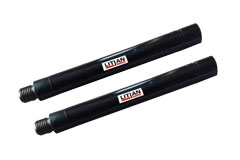
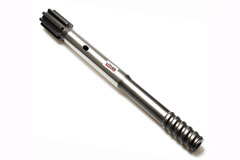
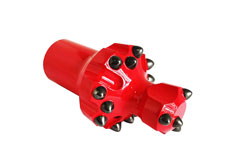
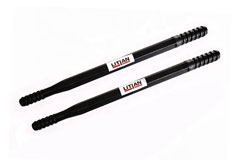
At Litian, we specialize in high-performance rock drilling tools, including top hammer and DTH systems used alongside core drilling operations in mining and tunneling projects. If you're looking for reliable drilling consumables that deliver consistent results in demanding conditions, feel free to explore our range.
Q: Can I use a hammer drill for core drilling?
A: Technically possible for very small and shallow holes, but not recommended. Hammer drills lack the precision and hollow bit design needed for proper core extraction.
Q: What is core drilling used for in mining?
A: Core drilling in mining is primarily used to extract rock samples for geological analysis and resource evaluation. You can learn more here: What is Core Drilling in Mining?

Litian is a professional manufacturer focused on the production of rock drilling tools and excavation tools.
Learn More >