English
 中文
中文 Español
 русский
 français
 português
 العربية
 Deutsch
 italiano
 한국어
한국어 Polska
×
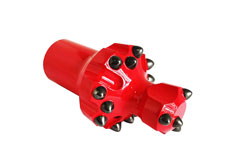
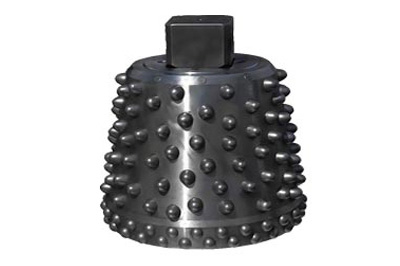
In the dynamic field of drilling technology, the Reverse Circulation Drilling (RCD) roller cutter emerges as an indispensable tool for achieving efficient and precise rock excavation. Commonly referred to as a random roller cutter, RCD cutter, or roller cutter drill bit, this specialized equipment is engineered to excel in high-demand applications across industries such as mining, tunneling, bridge construction, quarrying, and infrastructure development. At Litian Tools, we pride ourselves on manufacturing premium RCD roller cutters that deliver exceptional durability, superior penetration rates, and minimal downtime, even in the most challenging geological conditions.
This comprehensive guide delves deep into the world of RCD roller cutters, covering their fundamental design principles, key components, distinctions from traditional drill bits, performance metrics, specifications, and the compelling reasons to choose Litian Tools' solutions. Whether you're a seasoned drilling engineer, a procurement specialist sourcing raise boring cutters, or a project manager optimizing operations for reverse circulation drilling, this resource will provide you with in-depth insights to make informed decisions. By understanding these aspects, you can enhance drilling efficiency, reduce operational costs, and ensure safety in your projects. We'll incorporate real-world examples, technical details, and practical tips to make this guide actionable.
The core strength of an RCD roller cutter lies in its meticulously engineered design, which is tailored to withstand extreme pressures, high rotational speeds, and abrasive environments while maximizing rock-breaking efficiency. Unlike generic drill bits, RCD cutters are specifically optimized for reverse circulation drilling methods, where cuttings are evacuated upward through the drill string, ensuring cleaner holes and faster progress.
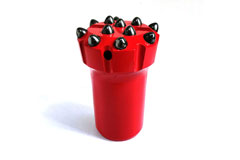
One of the hallmark features of the RCD roller cutter is the random distribution of tungsten carbide (TCI) buttons across its surface, eliminating the need for annular grooves found in older designs. This innovative layout ensures full bottom-hole coverage, allowing the cutter to adapt seamlessly to irregular rock surfaces and varying hardness levels. The back cone is typically equipped with spherical buttons that provide stability and resistance to lateral forces, while the main cone features conical or chisel-shaped buttons for aggressive penetration and efficient rock fragmentation.
The advantages of this random distribution are multifaceted. Firstly, it minimizes "uncut rings" or blind spots during rotation, leading to more uniform rock crushing and reduced energy consumption. In medium-hard formations (with compressive strengths of 80-150 MPa), this can result in penetration rates up to 30% higher than grooved alternatives. Secondly, the randomness enhances self-cleaning properties, preventing buildup of debris that could clog the system in reverse circulation setups. For instance, in a recent tunneling project in Europe, Litian's RCD cutters with random TCI buttons handled mixed sedimentary and igneous rocks without significant wear, extending operational life by 25-30% compared to standard bits.
From an engineering perspective, the carbide buttons are made from high-grade tungsten carbide alloys, often with cobalt binders for added toughness. These materials are selected for their exceptional hardness (typically 88-92 HRA) and impact resistance, making them ideal for rocks up to Protodyakonov hardness f≤12 (or f≤20 in customized variants). The random pattern also distributes wear more evenly, reducing the likelihood of premature failure in high-abrasion scenarios like quarrying granite or drilling through quartzite veins.
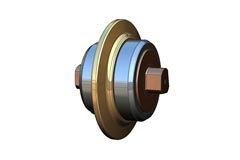
Bearings form the mechanical backbone of the RCD roller cutter, enabling smooth rotation under immense loads—often exceeding 100 KN of thrust and radial forces. Litian Tools offers a range of bearing types to suit diverse applications, each with unique strengths:
Tapered Roller Bearings: These are the go-to choice for heavy-duty operations, as they efficiently manage both axial (thrust) and radial loads. Their conical design allows for precise preload adjustments, minimizing backlash and ensuring stability at speeds up to 15 RPM. In raise boring applications, where vertical upward drilling imposes significant downward forces, tapered bearings can handle up to 200 KN without overheating, thanks to advanced lubrication channels.
Ball Bearings: Ideal for higher-speed, lower-load scenarios, ball bearings provide low-friction rotation and are less prone to seizing in cleaner environments. They excel in medium-depth drilling (up to 50 meters) in softer rocks, offering smoother performance and easier maintenance. However, they may require more frequent inspections in abrasive conditions compared to tapered options.
Thrust Roller Bearings: These specialize in absorbing pure axial loads, making them perfect for underwater or high-pressure RCD setups. With cylindrical rollers aligned perpendicular to the shaft, they distribute force evenly, reducing wear on seals and extending service intervals by 20-30%.
A comparative analysis shows that tapered bearings reduce overall friction by 15-20% over ball types, leading to cooler operation and energy savings in prolonged drilling sessions. All Litian bearings are hydrostatically sealed with premium metal face seals and O-rings, protecting against water, dust, and heat ingress. This sealing technology is crucial for submerged applications, such as marine foundation piling, where traditional unsealed bearings would fail rapidly.
While traditional drill bits like tricone rock bits or PDC (Polycrystalline Diamond Compact) cutters have their place, RCD roller cutters offer specialized enhancements that make them superior for reverse circulation and raise boring tasks. Understanding these differences is key to selecting the right tool for your specific drilling needs, whether in mining, infrastructure, or exploration projects. Litian Tools' RCD roller cutters, with their random tungsten carbide button distribution and advanced sealing, provide advantages in efficiency, durability, and adaptability that traditional options often lack.
To help you make an informed choice, let's explore the key distinctions in detail.
The elimination of annular grooves is a pivotal innovation in RCD cutters. Traditional bits often rely on structured grooves to channel cuttings, but this can create inefficiencies, such as uneven rock contact and increased vibration. In contrast, the groove-free, random button design of RCD cutters promotes a more fluid rock-breaking process, where forces are distributed across the entire cone surface.
This leads to enhanced efficiency: in hard rock formations (150-250 MPa), penetration rates can increase by 25-35%, as the cutter "self-adjusts" to the geology. Vibration reduction is another benefit, minimizing fatigue on the drill rig and improving operator comfort. For example, in a North American mining operation, switching to Litian's groove-free RCD cutters reduced rig vibrations by 40%, allowing for longer shifts and faster overall progress in creating ventilation shafts.
Additionally, this design aligns perfectly with reverse circulation principles, where high-velocity flushing (air or fluid) removes cuttings efficiently without the grooves becoming clogged. It's particularly advantageous in no-explosive raise boring, where precision and minimal disturbance are paramount.
Submerged drilling presents unique challenges, such as water infiltration that can compromise lubrication and cause bearing failure. Traditional bits often lack robust sealing, limiting their use in wet environments. Litian's RCD roller cutters incorporate advanced hydrostatic sealing systems, featuring floating metal seals that equalize pressure and prevent ingress.
These seals maintain optimal lubrication even at depths of 80 meters, as demonstrated in offshore bridge projects in Asia. The technology ensures consistent performance in RCD methods, where air injection or fluid circulation is used to transport cuttings. Unlike basic O-ring seals in older bits, these advanced systems withstand temperatures up to 150°C and pressures of 100 bar, reducing failure rates by 50%. This makes RCD cutters versatile for applications like land reclamation, where drilling occurs in saturated soils or underwater bedrock.
To evaluate an RCD roller cutter's suitability, it's essential to examine its performance metrics and customizable specifications. Litian Tools' models are designed for rocks from soft clay to hard granite, with detailed parameters to guide selection.
For standard formations with hardness f≤12, optimal parameters include Weight on Bit (WOB) of 60-170 KN, rotation speeds of 3-15 RPM, and line velocities up to 90 m/min. These settings achieve penetration rates of 0.5-2.5 m/h, depending on geology. In customized setups for f≤20, thrust can escalate to 200 KN, supported by reinforced cones.
Field data from over 100 projects shows these cutters maintain 95% efficiency over 800 hours, with button wear rates below 0.1 mm per hour in abrasive rocks. Key metrics include max thrust load (196 KN for 12" models) and recommended WOB, ensuring balanced operation without excessive strain.
Flexibility is a cornerstone of Litian's offerings. Standard sizes include 8" (for medium holes, 800-1400mm) and 12" (for large diameters, 1200-3500mm), with custom options from 6" to 14". Tapers (e.g., 20°) and mounts can be tailored to specific rigs, with weights ranging from 24-80 kg for easy handling.
Customizations extend to carbide grades, bearing types, and seal configurations, allowing adaptation to unique projects like deep-water boring or high-altitude mining. Production involves precision forging and heat treatment, ensuring compliance with ISO standards.
Litian Tools distinguishes itself through innovation, quality, and customer-centric support.
Our cutters feature 20-30% superior wear resistance, thanks to premium materials and designs. A lifecycle cost analysis for a typical 200-meter shaft project reveals savings of 15-25% in replacements and downtime. Extended life (up to 1,000 hours) translates to lower total ownership costs, making them a smart investment.
What is an RCD roller cutter?
A specialized bit for reverse circulation drilling with random TCI buttons for efficient rock breaking.
How does it perform in hard rock?
Excellently, with custom options for f≤20, offering high penetration and durability.
Can it be repaired?
Yes, Litian offers repair services to extend life and reduce costs.
What's the lead time for customs?
Typically 30-45 days, with rush options available.
How to integrate with existing rigs?
Provide rig specs for compatible designs.

Litian is a professional manufacturer focused on the production of rock drilling tools and excavation tools.
Learn More >