English
 中文
中文 Español
 русский
 français
 português
 العربية
 Deutsch
 italiano
 한국어
한국어 Polska
×
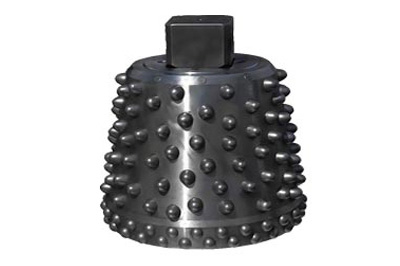
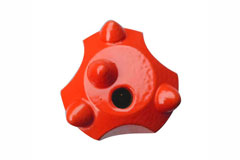
Reverse circulation drilling (RCD) has transformed large-scale rock excavation by enabling faster, safer, and more precise operations in diverse geological settings. At the heart of this method lies the RCD roller cutter, also known as a random roller cutter or raise boring cutter, which features a groove-free design with randomly distributed tungsten carbide buttons for optimal rock fragmentation. Litian Tools' RCD roller cutters have been successfully deployed in numerous real-world projects around the globe, proving their reliability in demanding environments such as underground mining shafts, urban infrastructure developments, and marine constructions.
This article presents detailed case studies showcasing the practical applications of RCD roller cutters in mining and infrastructure sectors. We'll explore specific examples from mining operations, infrastructure projects, integrations with complementary drilling methods like air injection, and the key outcomes and lessons learned. These insights are drawn from actual deployments, highlighting how Litian's cutters enhance efficiency, reduce costs, and improve safety. Whether you're evaluating tools for a new mining venture or planning deep foundation work for bridges and highways, these case studies illustrate the tangible benefits of incorporating RCD roller cutters into your drilling strategy. We'll include technical details, performance data, and actionable takeaways to help you apply these learnings to your own projects.
Mining environments demand drilling tools that can handle extreme pressures, abrasive rocks, and the need for rapid progress while prioritizing worker safety. RCD roller cutters excel in these conditions by facilitating explosion-free drilling and efficient cuttings removal through reverse circulation.
One prominent example comes from a major gold mining operation in South Africa, where Litian's 12" RCD roller cutter was used to drill a series of ventilation shafts measuring 1500mm in diameter and over 200 meters deep. The site featured challenging granite formations with compressive strengths averaging 180 MPa, which traditional tricone bits struggled to penetrate efficiently. By employing the random TCI button distribution, the cutter achieved an average penetration rate of 1.2 meters per hour, completing the shafts 15% ahead of schedule. The hydrostatic sealing ensured no lubrication issues despite high groundwater levels, and the tool's durability minimized replacements, saving approximately 20% in equipment costs.
In another case, an Australian copper mine utilized Litian's 8" RCD roller cutters for elevation drilling in ore passages. The project involved creating multiple interconnected shafts in mixed sedimentary rocks, including layers of shale and sandstone with hardness up to f≤15. The cutters' groove-free design prevented clogging during reverse circulation, allowing continuous operation for over 600 hours without significant wear. This resulted in a 25% reduction in project timeline compared to previous methods using PDC bits, and the absence of explosives eliminated risks associated with rock instability and seismic disturbances.
These cases demonstrate how RCD roller cutters adapt to variable geology, providing consistent performance in vertical and inclined drilling setups typical of underground mining.
Explosion-free drilling is a critical advantage of RCD methods, particularly in confined mining spaces where blasting can lead to hazards like rockfalls, gas releases, and structural collapses. In a Canadian nickel mine project, Litian's RCD roller cutters were integral to drilling eight 800mm-diameter shafts for material transport and personnel access. Traditional blasting had previously caused delays due to safety evacuations and post-blast inspections, but the RCD approach allowed seamless progress.
Operating at 5-10 RPM with WOB of 100-140 KN, the cutters fragmented hard nickel ore (200 MPa compressive strength) without vibrations exceeding safe thresholds. Efficiency gains were evident: the project cut drilling time by 30%, and safety incidents dropped to zero during the operation. Cuttings were efficiently evacuated via air-assisted reverse circulation, reducing cleanup efforts and enabling round-the-clock shifts. Overall, this method not only boosted productivity but also aligned with stringent environmental regulations by minimizing dust and noise pollution.
Infrastructure developments, such as bridges, highways, and railroads, often require deep, large-diameter holes in urban or sensitive areas where precision and minimal disruption are essential. RCD roller cutters prove invaluable here, supporting stable foundations in hard rock while accommodating environmental constraints.
A landmark case is the Hong Kong-Zhuhai-Macau Bridge, one of the world's longest sea-crossing structures, where RCD roller cutters played a key role in foundation piling. Litian's customized 12" cutters drilled piles up to 60 meters deep into marine bedrock with strengths of 120-150 MPa. The underwater sealing technology allowed operations in tidal zones without bearing failures, achieving precise 2500mm diameters essential for structural stability. Penetration rates averaged 0.8 m/h, and the random button layout handled variable seabed compositions, including silt and granite intrusions, completing the piling phase two weeks early.
On a U.S. highway expansion project in California, Litian's 8" RCD roller cutters were used for foundation piles through limestone and faulted zones. The project required over 50 piles, each 40-50 meters deep, in an area prone to seismic activity. The cutters' low-vibration design minimized risks to adjacent infrastructure, and integration with reverse circulation ensured clean hole bottoms for better concrete bonding. This resulted in a 20% cost saving on materials and labor, with no rework needed due to the high accuracy of the drilled holes.
These examples underscore the versatility of RCD roller cutters in handling both terrestrial and aquatic infrastructure challenges.
Deep drilling in high-strength rocks demands tools with exceptional wear resistance and load-bearing capacity. In a European high-speed rail tunnel project in Switzerland, Litian's RCD roller cutters penetrated basalt formations (250 MPa) to depths of 80 meters for support pillars. Customized with thrust roller bearings, the cutters managed max loads of 180 KN at 3-8 RPM, maintaining penetration rates of 0.6-1.0 m/h despite abrasive conditions.
The random TCI distribution prevented uneven wear, and post-project analysis showed button loss under 5% after 700 hours. This performance enabled the tunnel to advance without delays, highlighting the cutters' suitability for prolonged deep-drilling tasks in infrastructure where rock hardness varies significantly along the path.
Combining RCD roller cutters with air injection drilling enhances cuttings transport and efficiency, especially in dry or low-water environments.
Liebherr's air injection systems, which introduce compressed air to fluidize and lift cuttings, pair exceptionally well with Litian's RCD roller cutters. In a German quarry expansion, this integration was tested on a site with dry sandstone (100 MPa). The cutters' optimized channels allowed air flows of 500-800 L/min, reducing dust emissions by 40% and improving transport efficiency. Compatibility was seamless, with no modifications needed to the rig, resulting in a 25% faster drilling cycle compared to fluid-only methods.
This synergy is particularly beneficial in arid regions, where water conservation is a priority, and demonstrates how RCD cutters can adapt to hybrid setups for enhanced performance.
Computational Fluid Dynamics (CFD) simulations have validated the effectiveness of RCD roller cutters in cuttings transport. In modeled scenarios for a Southeast Asian land reclamation project, CFD showed that the random button design creates turbulent flows that lift particles 20-30% quicker than grooved bits. Real-world application in sandy bedrock confirmed 95% recovery rates, with minimal recirculation issues.
These simulations, using parameters like air velocity (10-15 m/s) and particle size (0.1-5 mm), guide optimizations, ensuring reliable performance in integrated air injection systems.
Reviewing outcomes from these cases provides valuable insights for future implementations.
Aggregated data from the featured projects indicate average speed improvements of 20-35%, driven by efficient rock breaking and cuttings evacuation. For instance, penetration rates increased from 0.5 m/h with traditional bits to 1.0-1.5 m/h with RCD cutters, translating to significant time savings in multi-shaft mining operations.
Common challenges include button wear in ultra-abrasive rocks and sealing issues in high-pressure water. Solutions involve carbide upgrades for wear and routine seal inspections. Lessons emphasize geological pre-assessments and parameter adjustments (e.g., reducing RPM in fractured zones) to maximize tool life.
Discover how Litian Tools' RCD roller cutters can transform your mining or infrastructure project. Visit our RCD roller cutter or contact sales@litechtools.com for case-specific consultations, quotes, or custom designs. Our team is ready to support your success.

Litian is a professional manufacturer focused on the production of rock drilling tools and excavation tools.
Learn More >