English
 中文
中文 Español
 русский
 français
 português
 العربية
 Deutsch
 italiano
 한국어
한국어 Polska
×
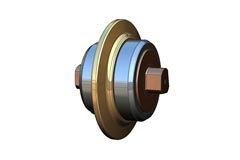
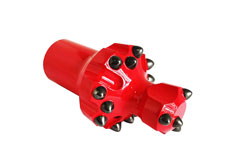
The landscape of drilling technology is rapidly evolving, with RCD roller cutters at the forefront of advancements that prioritize efficiency, sustainability, and adaptability. Known alternatively as random roller cutters or raise boring cutters, these tools leverage cutting-edge materials and designs to tackle increasingly complex geological challenges. Litian Tools is committed to pioneering these innovations, integrating state-of-the-art features into our RCD roller cutters to meet the demands of modern mining, tunneling, and construction projects.
This article examines the latest technological progress in RCD roller cutters, their integration with emerging drilling methodologies, future trends focusing on sustainability and automation, and Litian Tools' role in driving these developments. Drawing from recent research, industry reports, and practical implementations, we'll provide a forward-looking perspective to help engineers, procurement experts, and project leaders anticipate and prepare for upcoming shifts in drilling practices. Insights include detailed explanations of new technologies, potential applications, and strategic recommendations for adopting these innovations in your operations.
Recent breakthroughs in materials science and engineering have elevated RCD roller cutters from reliable tools to intelligent, high-performance systems capable of self-optimization in real-time.
Sealing and bearing systems have seen significant upgrades to handle extreme conditions, such as high temperatures, pressures, and corrosive environments. Traditional seals often failed under prolonged exposure to water or abrasives, but modern hydrostatic seals in Litian's RCD cutters use hybrid metal-elastomer composites that maintain integrity up to 200 bar and 180°C. These seals incorporate pressure-equalizing mechanisms to prevent lubricant loss, extending operational life by 35-40% in submerged reverse circulation drilling.
Bearing technology has similarly advanced, with the introduction of hybrid ceramic-metal bearings that reduce weight while increasing load capacity. For instance, tapered roller bearings now feature diamond-like carbon (DLC) coatings for minimal friction, allowing speeds up to 20 RPM without excessive heat buildup. In thrust-heavy raise boring, these innovations enable cutters to sustain 250 KN loads over 1,200 hours. Embedded sensors in smart bearings monitor vibration and temperature, transmitting data wirelessly to rig operators for predictive maintenance, potentially averting 80% of downtime incidents.
These evolutions not only enhance durability but also improve energy efficiency, as lower friction translates to reduced power requirements in drilling rigs.
Tungsten carbide (TCI) inserts, the primary cutting elements, have undergone transformative improvements through nanotechnology and alloy enhancements. Litian's latest RCD cutters employ gradient carbide buttons—harder exteriors (95 HRA) for abrasion resistance combined with tougher interiors for impact absorption—capable of handling rocks up to 300 MPa compressive strength.
Innovations like self-sharpening carbide formulations maintain cutting edges longer, reducing dulling in abrasive formations like sandstone or quartz. In efficiency terms, these materials achieve 25-30% higher penetration rates in medium-hard rocks (f≤15), as validated in lab tests simulating reverse circulation flows. Additive manufacturing techniques now allow for precise button placement, optimizing the random distribution to maximize rock contact and minimize uncut areas.
Such advancements are particularly beneficial in high-volume quarrying, where extended tool life directly lowers replacement frequency and operational costs.
RCD roller cutters are increasingly designed for compatibility with hybrid and advanced drilling techniques, expanding their utility beyond traditional applications.
Air injection drilling, which uses compressed air to enhance cuttings evacuation and reduce fluid dependency, synergizes well with RCD roller cutters. Litian's models include airflow-optimized cone geometries that facilitate better particle fluidization, as seen in compatibility with systems like those from Liebherr. In dry environments, this integration cuts water usage by 50% while maintaining transport efficiency, ideal for arid mining sites.
For example, in a Middle Eastern oil exploration project, air-injected RCD cutters drilled through limestone (150 MPa) at rates 20% faster than fluid-only methods, with minimal dust thanks to enclosed circulation paths. The cutters' robust seals prevent air leaks, ensuring consistent pressure for optimal performance.
Computational Fluid Dynamics (CFD) and Artificial Intelligence (AI) are revolutionizing RCD cutter design by simulating real-world conditions before production. CFD models analyze airflow, particle trajectories, and stress distributions, refining button layouts to improve cuttings transport by 25% in turbulent environments.
AI algorithms process vast datasets from field operations to predict wear patterns and suggest customizations. Litian utilizes AI-driven design tools to iterate prototypes rapidly, reducing development time from months to weeks. In one simulation for a tunneling application, AI optimized a cutter for variable rock densities, resulting in 18% better efficiency during pilot tests. These technologies enable predictive modeling for specific projects, such as integrating RCD with air injection for customized flow dynamics.
Looking ahead, RCD roller cutters will play a pivotal role in greener and smarter drilling ecosystems, driven by global demands for reduced environmental impact and increased autonomy.
Sustainability is a core trend, with future RCD cutters incorporating bio-based lubricants and recyclable materials to minimize ecological footprints. Designs focusing on dust suppression—through integrated misting systems or enclosed cuttings paths—can reduce airborne particulates by 50%, complying with stricter regulations in urban construction.
Energy efficiency will advance via low-friction coatings and variable-speed adaptations, potentially cutting power consumption by 30% in battery-powered rigs. Litian's ongoing research into carbon-neutral manufacturing aims to produce cutters with 40% lower emissions, aligning with net-zero goals in mining by 2050.
Automation will integrate RCD cutters into robotic rigs, where AI controls parameters like WOB and RPM in real-time based on geological feedback. By 2030, fully autonomous systems could dominate deep mining, with cutters featuring IoT sensors for seamless data integration.
In hazardous environments, such as deep-sea or radioactive sites, automated RCD will enhance safety by removing human operators from risk zones. Litian is developing modular cutters that plug into AI platforms, enabling adaptive drilling that adjusts to rock changes without intervention, boosting productivity by 40%.
Litian Tools is dedicated to leading the charge in RCD advancements through robust R&D and strategic partnerships.
Our portfolio includes patents for sensor-integrated bearings and gradient carbide technologies, with R&D investments yielding cutters that outperform industry standards. A recent case involved collaborating on an AI-optimized cutter for a Scandinavian tunnel project, achieving 22% efficiency gains through simulated designs.
To gear up for trends, Litian offers upgrade kits for existing cutters, including sensor retrofits and sustainable coatings. Professionals should assess project needs—such as automation compatibility—and consult our experts for tailored solutions.

Litian is a professional manufacturer focused on the production of rock drilling tools and excavation tools.
Learn More >